
Erick MartellOct 912 min read
Body contouring after weight loss in Alaska refers to surgical options that may remove or reshape areas of excess skin after significant weight loss; the appropriate approach depends on a person’s health, anatomy, goals, and the areas involved. For adults in Fairbanks and Interior Alaska, the first step is learning how procedures differ and discussing individual questions with a qualified surgeon. North Star Plastic Surgery’s body-contouring overview introduces options offered by the practice and connects to the broader body-procedure guide.
What body changes happen after significant weight loss?
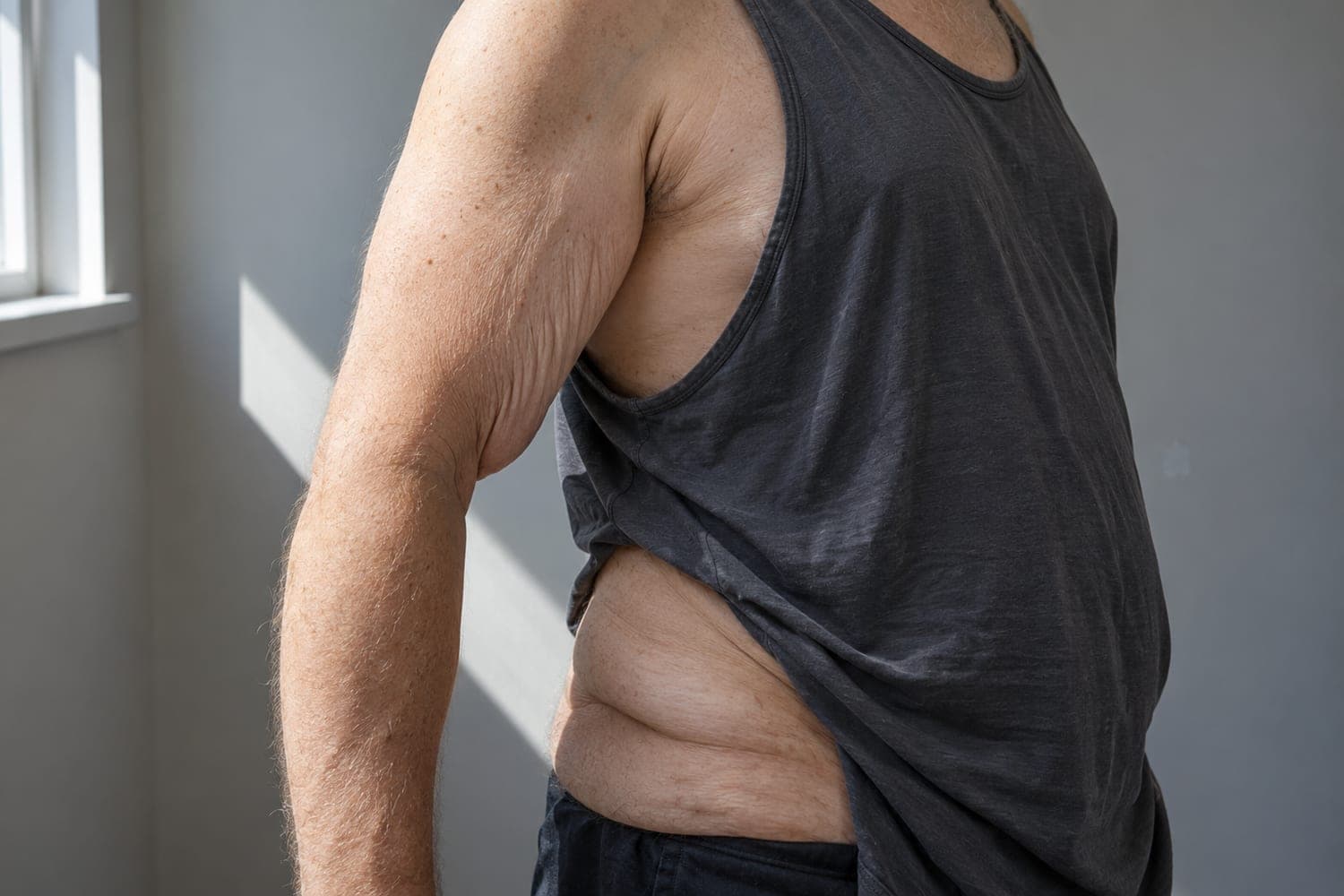
After substantial weight loss, skin and the tissues beneath it may not conform closely to the body’s new shape. How much loose skin remains varies. It can depend on factors such as the amount and pace of weight loss, age, skin characteristics, and individual anatomy. People may notice folds or hanging skin around the abdomen, upper arms, thighs, breasts, or other areas.
Excess skin is not the same concern as remaining fat. A person may have loose skin, localized fat, or both. These concerns are addressed differently, which is one reason a procedure name or a photograph cannot determine what is suitable for an individual. A consultation allows a surgeon to understand the person’s goals and evaluate the areas in question.
Loose skin can also affect practical parts of everyday life. A person might find that skin folds rub against clothing, make some activities uncomfortable, or require extra attention when choosing garments. Others are mainly concerned with the way their body looks after weight loss. These experiences are personal; there is no single “right” amount of skin to have removed, and surgery is not necessary simply because someone has lost weight.
Some people consider body contouring after bariatric surgery, while others reach significant weight loss through a different path. The history of weight loss is useful background for a consultation, but it does not by itself determine which procedure is appropriate. The surgeon also needs to understand the person’s current health, priorities, and expectations. Research on body-contouring surgery after massive weight loss has discussed excess skin and potential effects on health-related concerns and quality of life, but outcomes vary and are not guaranteed. Read the PubMed-indexed review of body contouring after massive weight loss.
A useful starting checklist is to write down:
Which areas bother you most, and what specifically feels difficult about them?
Whether the main concern is excess skin, localized fat, or a combination you want assessed.
How weight loss occurred and whether your weight has been changing recently.
Relevant health conditions, prior operations, medicines, and questions about recovery.
What changes you hope for, and what you understand surgery may not change.
This list is for organizing a conversation, not for deciding on a procedure or making a medical decision on your own. It can also help distinguish what you want to learn now from what would require an examination. For example, you can note that the lower-abdominal fold is your first concern, while listing arm or thigh skin as a separate question. That gives the consultation a clear starting point without presuming that every area needs treatment.
Weight stability and overall health are also reasonable topics to raise. Rather than relying on a general rule found online, ask how your own history affects planning and whether the surgeon would want any additional information before discussing options. If your weight is still changing, tell the practice so the timing conversation can take that into account. This is a question for an individual clinical discussion, not a standard timeline that applies to every person.
Which procedures address excess skin after weight loss?
There is no single operation that addresses every area of excess skin. A surgeon may discuss an operation focused on one region, or whether separate areas are best considered in stages. The names below describe documented procedure categories and are not a recommendation for any one person. North Star Plastic Surgery lists body procedures, including body contouring, panniculectomy, arm lift, thigh reduction, tummy tuck, and liposuction.
Option
Area or concern it may address
Key distinction to discuss
Panniculectomy
Excess hanging skin and tissue concentrated in the lower abdomen
Focuses on removing an apron of excess tissue; it is not the same operation as a tummy tuck.
Tummy tuck (abdominoplasty)
Abdominal contour concerns that may include loose skin
The surgical plan and goals differ from panniculectomy; ask what the proposed operation involves.
Arm lift (brachioplasty)
Loose skin along the upper arms
Addresses the arm area rather than the abdomen or thighs.
Thigh reduction (thighplasty)
Excess skin affecting the thighs
The area and approach depend on where skin excess is located.
Liposuction
Selected areas of localized fat
Removes fat; it does not remove a large amount of loose skin.
Body contouring
A broader discussion of reshaping after weight loss
May involve evaluation of more than one area; the specific plan is individualized.
The table is a general comparison, not a way to select an operation. For example, removing fat alone does not solve a concern that is primarily loose skin. Similarly, an operation that focuses on the lower abdomen may not address upper-arm or thigh skin. A clinical assessment is needed to explain which choices are relevant and what each one entails.
It may help to describe the specific problem rather than arriving with a procedure name. Someone might say, “I am concerned about the fold below my abdomen and how it affects clothing,” or, “The loose skin on my upper arms is my main question.” The surgeon can then explain whether the concern corresponds to a documented procedure category, whether another evaluation is needed, and what the options do and do not address. This avoids assuming that two people with similar weight-loss histories have the same anatomy or goals.
For additional context, see the practice’s information on panniculectomy, tummy tuck surgery, arm lift, and thigh reduction. The liposuction page describes a separate option for selected fat concerns. Each page describes a procedure category; reading about one does not establish that it is suitable or offered as part of a particular combination for an individual.
One practical way to compare options is to ask the same questions about each area: What concern is this procedure intended to address? What would likely remain unchanged? What are the important risks and limitations? What recovery and follow-up should I plan to discuss? Would other areas need a separate operation? The answers make it easier to compare a proposed plan with your own priorities rather than comparing procedure names alone.
Panniculectomy after bariatric surgery: insurance coverage basics
A panniculectomy removes excess skin and tissue that hangs from the lower abdomen. Some people explore it after major weight loss, including weight loss following bariatric surgery. Whether a health plan covers the procedure depends on the insurer’s policy, the plan, and the person’s documentation and circumstances. Coverage should never be assumed based on the procedure name or on another patient’s experience.
As a starting point, review your plan documents and ask the insurer what criteria and records it requires to consider coverage. You can also ask the practice what documentation it can provide and what steps are involved in checking benefits. These conversations do not guarantee an insurer’s decision. The insurer makes its own coverage determination. If the plan uses terms such as medical necessity, prior authorization, or benefit exclusion, ask the representative to explain how each applies to your specific policy.
A simple coverage-information workflow can keep the questions organized:
Identify the exact procedure under discussion.
Ask the surgeon to explain the proposed procedure in plain language, since a general abdominal-contouring inquiry and a specific panniculectomy request may be treated differently in plan documents.
Contact the insurer using the information on your member card.
Ask whether the plan considers the procedure a covered benefit under any circumstances, and request the criteria in writing if available.
Confirm the documentation process.
Ask what records or referral information may be required and whether the insurer needs prior authorization before a procedure is scheduled.
Keep notes and reference numbers.
Record the date, the department you spoke with, and any instructions or forms. This helps you follow up consistently if different representatives provide different information.
Ask how a decision is communicated.
Find out how the plan explains an approval or denial and what review or appeal process applies.
Questions to ask your health plan may include:
Does the plan consider panniculectomy a covered benefit in some circumstances?
What medical-necessity criteria, if any, apply to this procedure?
What clinical records or other documentation must be submitted?
Does the plan require prior authorization or a particular referral process?
How will the plan explain its decision and any review or appeal steps?
Do not treat a general description of possible coverage as confirmation for your plan. Benefits can vary, and coverage can depend on the specific policy and review. The practice’s team can be contacted with questions, while the insurer is the source for plan-specific benefit and authorization information. North Star Plastic Surgery documents panniculectomy as a procedure that may have insurance coverage; that does not mean every case will be covered.
It can be useful to separate clinical questions from benefit questions. The surgeon can explain the proposed procedure and relevant clinical documentation. The insurer can explain the policy’s coverage criteria, authorization steps, and member responsibilities. Neither conversation should be treated as a guarantee of the other party’s decision. If you receive an insurer response before a consultation, bring the relevant wording or reference details so it can be discussed in context.
Panniculectomy and tummy tuck are related abdominal procedures, but they are not interchangeable terms. Their goals and details can differ. If you are considering one after weight loss, ask the surgeon to explain the proposed procedure in plain language, why it is being considered, what it does not address, and how any insurance review would be handled. Avoid relying on online descriptions to decide which operation you need.
Combining procedures: planning your post-weight-loss journey in stages
When excess skin affects more than one area, people often wonder whether several procedures can be performed together. There is not one standard answer. The surgeon considers the overall plan and individual health factors, as well as the areas involved and the demands of recovery. Sometimes a staged approach is discussed so that separate areas are addressed at different times. Whether procedures can be combined is a medical decision for the surgeon and patient to discuss.
Thinking in stages can help make the conversation more practical. Rather than arriving with a fixed list of operations, consider describing priorities. For example, you might say which area has the greatest effect on daily comfort, which matters most to your personal goals, and what questions you have about recovery. The surgeon can then discuss whether your priorities align with the options that may be considered.
Consider a hypothetical patient whose concerns involve the lower abdomen, upper arms, and thighs. The useful starting question is not necessarily how to schedule all three areas. It is which concern is most important to discuss first, what procedure category might address it, and what tradeoffs or recovery considerations affect the sequence. Another person may have only one area they want assessed. The plan should follow the individual evaluation, not a template based on someone else’s experience.
Helpful planning questions include:
Which concern would you address first if the plan needs to be staged, and why?
What does each procedure address, and what concerns would remain?
What are the tradeoffs of combining procedures versus considering them separately?
How would the overall recovery demands affect home responsibilities and work?
What factors might lead the surgeon to recommend delaying or changing the plan?
How will follow-up be arranged between stages?
It can also help to separate hopes from assumptions. Surgery may change the contour of selected areas, but it cannot promise a particular appearance or erase every effect of weight change. Ask the surgeon to discuss realistic goals and limitations for your own situation. If a proposed procedure is not among the practice’s documented services, North Star Plastic Surgery’s team should check with Dr. Martell rather than assume it is offered.
Before a consultation, you can rank your concerns in a short list: first priority, second priority, and questions for later. Add one sentence explaining why each area matters to you. This is more useful than trying to determine a complete surgical sequence by yourself. If the surgeon recommends focusing on one area first, ask what information supports that recommendation and what would need to be reconsidered before any later stage.
North Star Plastic Surgery provides care in Fairbanks, Alaska. Local continuity may be relevant when comparing where to have a consultation and how to plan follow-up, especially for people living in Interior Alaska. Ask directly how appointments and follow-up work for the specific procedure under consideration. The practice’s about page describes Erick Martell, MD, as double board certified in General Surgery and Plastic & Reconstructive Surgery. Board certification is a useful credential to understand, and patients can ask what the surgeon’s training and certification mean for the care being discussed.
Recovery expectations when combining multiple body contouring surgeries
Recovery is different for each person and depends on the procedure or procedures performed. If a plan includes more than one area, it is especially important to ask the surgeon how the combined plan affects recovery expectations. This article cannot provide a personal recovery timeline or medical directions. Your care team should explain the instructions, restrictions, follow-up schedule, and who to contact for questions for your own operation.
Recovery planning is also a logistics discussion. Think through a typical week at home and note what might need to change: commuting, work duties, lifting, errands, caregiving, meal preparation, or help getting to appointments. These are not predictions about your restrictions. They are prompts to help you ask the care team what the specific procedure entails and what arrangements may be appropriate.
Before making a plan, consider the practical arrangements you may need to discuss with the practice:
Time away:
Ask how to think about time away from work, caregiving, and usual activities for the specific plan. If your work involves physical tasks, describe them rather than asking only for a generic return-to-work estimate.
Help at home:
Ask whether you may need another adult to assist during any part of the initial recovery, and what tasks might be difficult under the surgeon’s instructions.
Travel:
If you live outside Fairbanks, ask about the timing and location of follow-up visits and how to plan travel around them. Do not assume that a remote check-in can replace an appointment the practice asks you to attend.
Follow-up:
Confirm whom to contact with routine questions and what to do if you are concerned about a change in your condition.
Staging:
If procedures are planned in separate stages, ask how the team will decide when to revisit the next step and what needs to be reviewed first.
People traveling from Interior Alaska may want to group their planning questions together: How many in-person visits are expected for the proposed plan? How should travel timing be coordinated with follow-up? What is the process for contacting the practice between visits? The answers will depend on the individual plan. Asking before scheduling can help you understand the local-care and travel logistics without assuming that every patient follows the same schedule.
These are questions to take to the surgeon, not instructions about what every patient will need. Do not rely on generic recovery schedules from another person or website. The surgeon can explain the expected recovery for the planned procedure, factors that might change it, and when to seek help. If a plan changes from one area to several, ask for the recovery discussion to be revisited rather than applying an earlier estimate automatically.
Consulting with Dr. Martell in Fairbanks about your post-weight-loss goals
A consultation is an opportunity to describe what changed after weight loss, ask about possible options, and understand what an individual plan could involve. Dr. Erick Martell, MD, is double board certified in General Surgery and Plastic & Reconstructive Surgery. North Star Plastic Surgery serves patients in Fairbanks and the surrounding area.
To make the conversation more useful, you can bring a written list of priorities and questions. You may want to discuss:
The areas of excess skin or contour that concern you most.
Your weight-loss history and any relevant prior procedures or health information.
Whether the concern sounds more related to loose skin, localized fat, or something that needs an in-person assessment.
Which documented options may be relevant, and what each option would and would not address.
Potential risks, limitations, recovery planning, follow-up, and whether staging might be considered.
Whether your insurer has criteria for panniculectomy coverage and what information it needs.
You can also prepare a simple one-page note with three parts: your main concern, what you hope to understand, and practical questions about recovery or coverage. Bring the names of current medicines and relevant health history if the practice asks for them. If you have already spoken with your insurer, bring the plan’s instructions or reference number. You do not need to arrive having chosen an operation; deciding what needs evaluation is part of the conversation.
You can read the practice’s body-contouring information before contacting the office, then use the consultation page to learn how to start a conversation. The consultation is where the surgeon can evaluate your individual concerns; an article, checklist, or online photo cannot determine whether you are a candidate. The practice can also clarify which services are within its documented offerings and what questions need an in-person discussion.
Contact North Star Plastic Surgery to request a consultation
Frequently asked questions
Does everyone have excess skin after significant weight loss?
No. The amount and location of loose skin vary from person to person. Some people have little excess skin, while others notice it in one or several areas. An in-person evaluation is needed to discuss a particular concern.
Is panniculectomy the same as a tummy tuck?
No. They are distinct procedures with different goals and details. A surgeon can explain which, if either, relates to an individual’s concern and what the proposed procedure would address.
Will insurance cover panniculectomy after bariatric surgery?
Not necessarily. Coverage depends on the plan, its criteria, and the individual review. Ask your insurer for its requirements and ask the practice what documentation it can provide. Only the insurer can confirm coverage under your plan.
Can several body-contouring procedures be done at the same time?
That depends on the individual plan and the surgeon’s assessment. The surgeon can discuss the considerations involved in combining procedures or addressing areas in stages. Do not assume that a combination is appropriate for everyone.
What should I bring to a consultation?
Bring your questions, a description of the areas that concern you, and relevant information about your weight-loss history and health. The practice can tell you whether it needs any particular records for your appointment.
For people researching body contouring after weight loss in Alaska, a clear next step is to discuss personal goals, options, and recovery questions with a qualified surgeon in Fairbanks. North Star Plastic Surgery can explain its documented services and help you understand what to discuss next.
This article is educational and is not medical advice. Whether a procedure is right for you is decided through an evaluation with the practice.
